

Astronomy Photographer Of The Year Shortlist: 19 Magnificent Images
A galactic worm eats stars. A plasma whale slides over the surface of the sun. A spooky dragon dances along with the aurora. This is not a plot for a fantasy book, but our amazing universe in all its stunning detail. The Royal Observatory Greenwich announced the images that were shortlisted for the 2024 Astronomy Photographer Of The Year. The finalists were chosen from over 3,500 images submitted by professional and amateur photographers in 58 different countries. The winner will announced on September 12, and the National Maritime Museum in London will host an exhibition featuring the best images starting September 14.
“
Total Solar Eclipse”
Gwenael Blanck travelled to Australia in April 2023 to see the 62-second long total solar eclipse. This collage shows the corona, the pink chromosphere and Baily’s Beads, which are chinks in the sunlight due to the rugged terrain of the Moon. This image is composed of seven images, with one being overexposed to represent the background while the other six are for the chromospheres and prominences. Image: (c) Gwenael Blanck (France)
“A Cosmic Firework: the Geminid Meteor Shower”
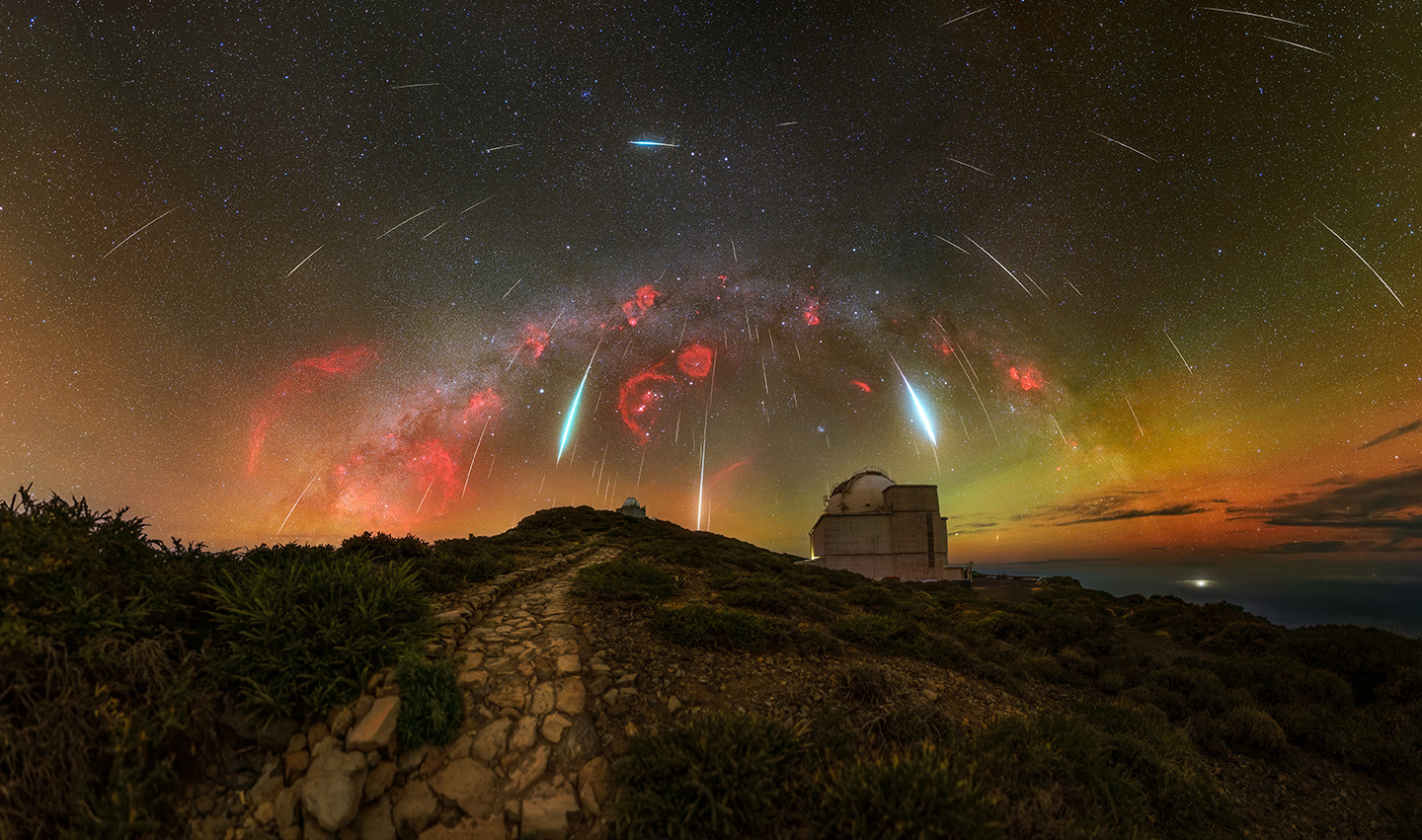 This photograph of the Geminid meteor shower was taken under perfect conditions on La Palma. Sahner was able to spot up to three meteors per second within his field of vision during the peak of night. The panorama depicts the winter Milky Way from La Palma, in RGB natural colours with additional details in H-alpha. Image: (c) Jakob Sahner (Germany)
“M81, a Grand Design Spiral Galaxy”
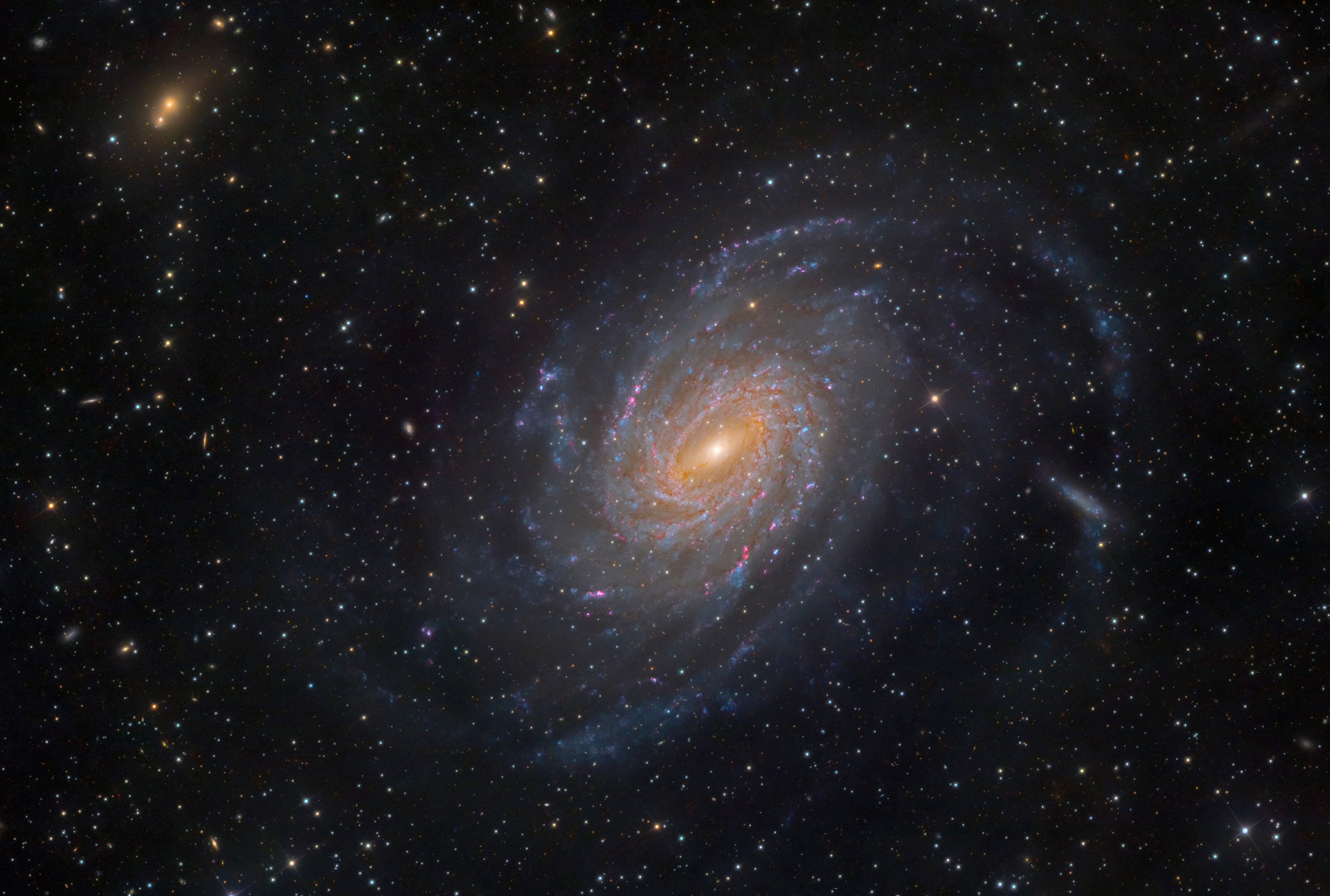 M81, also known as Bode’s Galaxy, is about 11.75 million light years away in the constellation Ursa Major. This is one of brighter galaxies visible in the night sky. Integrated Flux Nebula can be seen in the background of the image. IFN is dust that lies outside of the Milky Way galaxy plane and is only illuminated by stars within the Milky Way. Image: (c), Holden Aimar, USA, aged 14. “A Night with the Valkyries”.
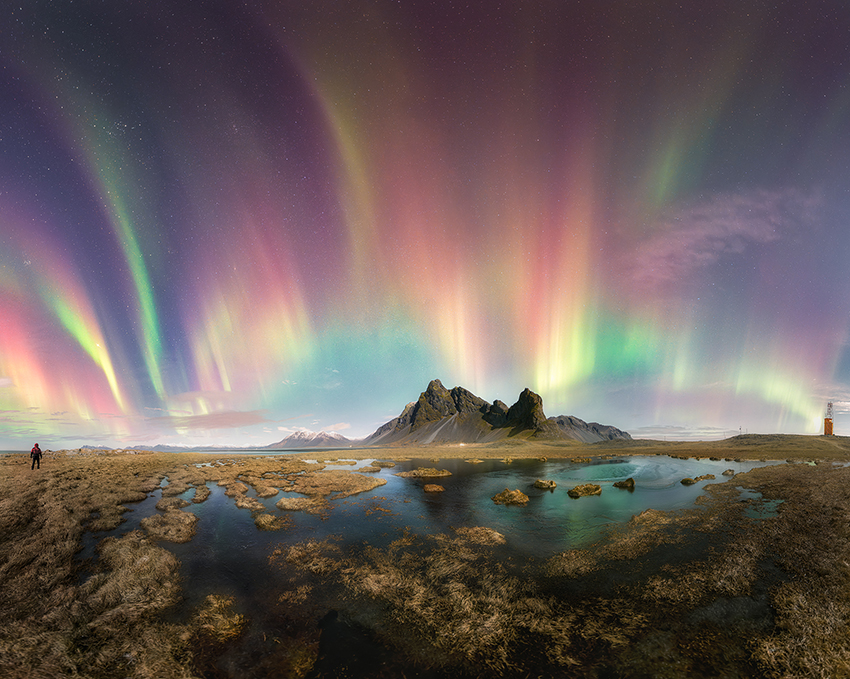
An image of the Eystrahorn Mountain in Iceland during a KP7 (a strong geomagnetic disturbance that can produce aurorae or disrupt electrical systems). The storm intensity was responsible for the stunning range of colors in the sky. Iimage: (c), Jose Miguel Picon Chimelis, Spain
 JOSE CHIMELIS
“The Fire-Spitting Dragon“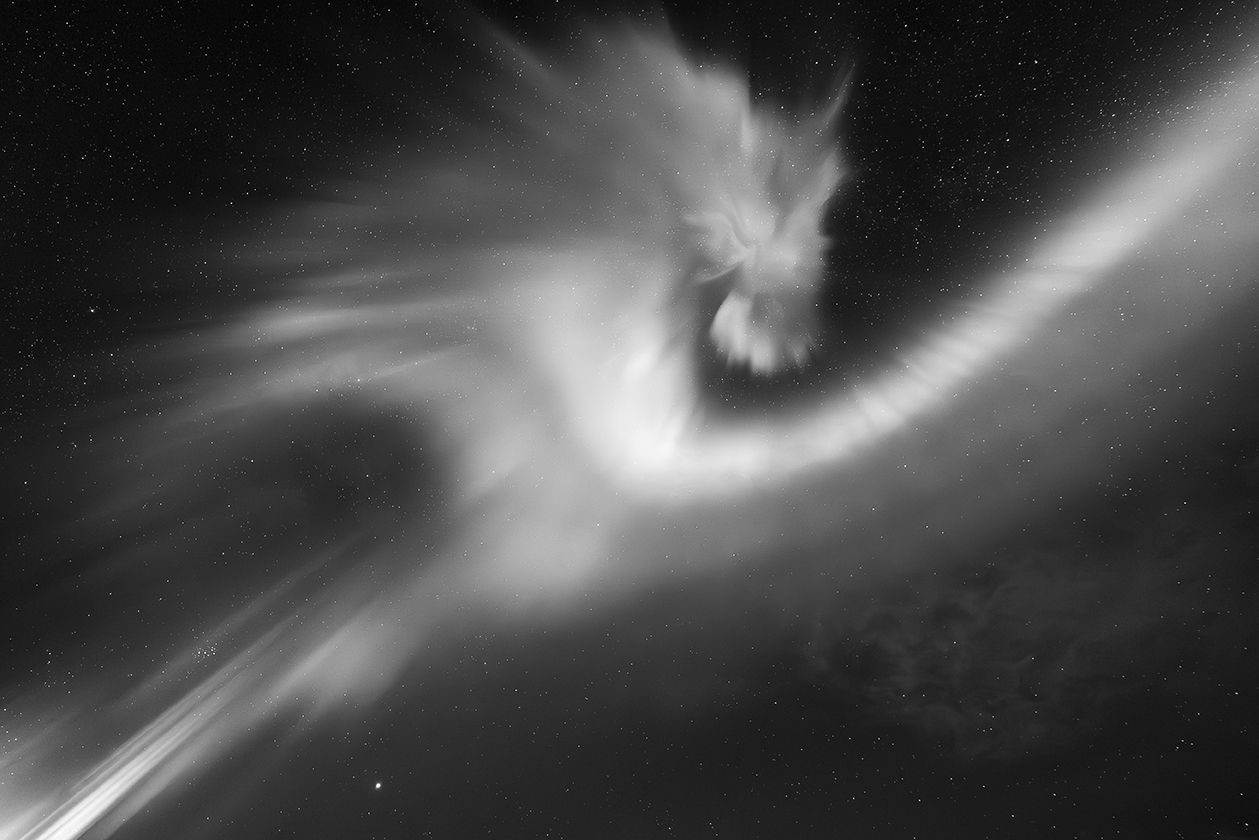 The photographer was able to capture the aurora in motion when it turned into something resembling a dragon’s head on a clear night. Telser used black and white in order to highlight the contrast between the aurora and the dark sky.
“A Whale Sailing the Sun
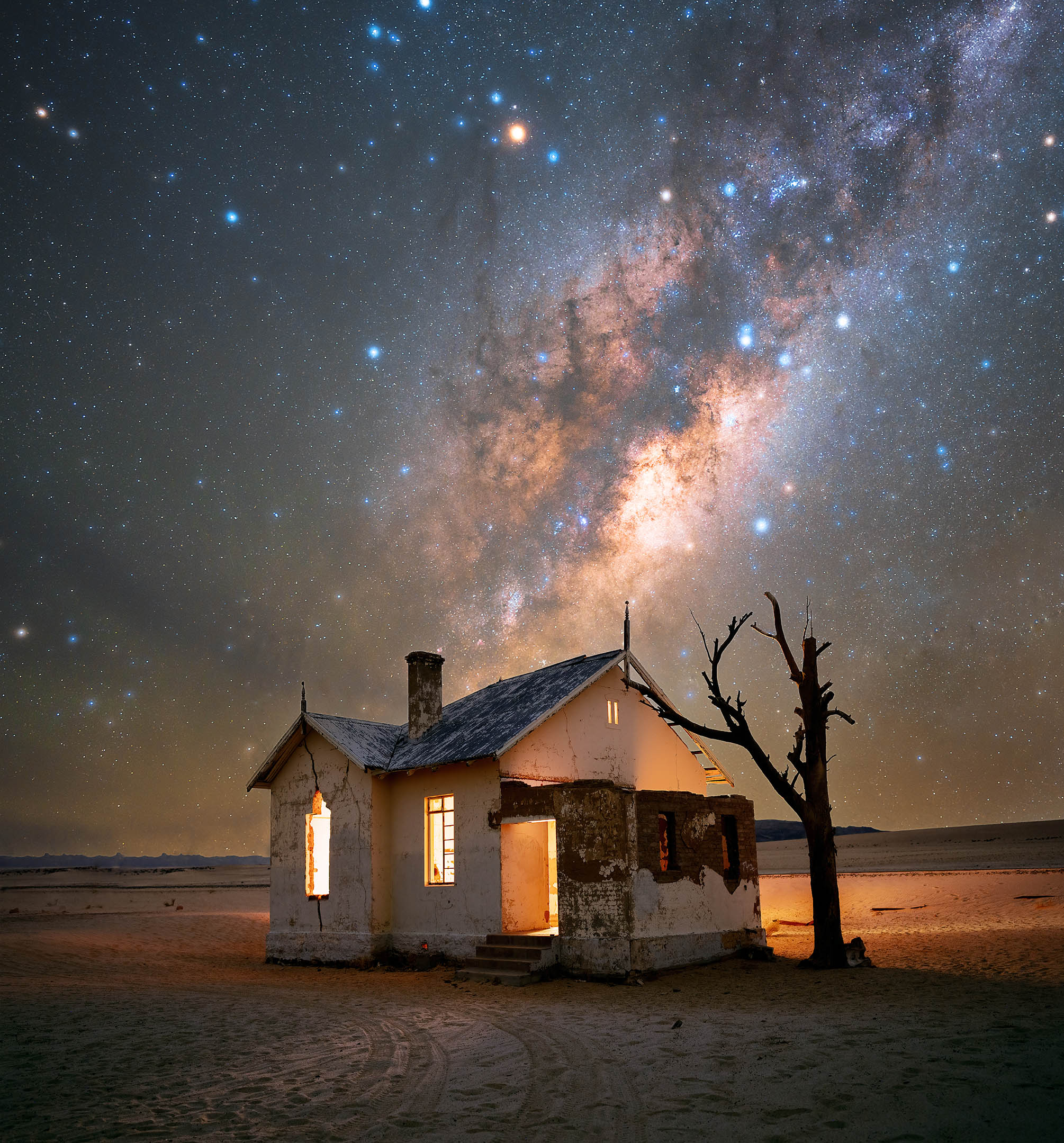
“This image shows the details of the Sun’s surface. The filament is viewed by the photographer as a huge plasma whale crossing the solar surface. Eduardo Schaberger Poupeau captured this photo by recording two videos (one for the disc and another for the prominences), each consisting of 850 frames. Image: (c) Eduardo Schaberger Poupeau (Argentina) 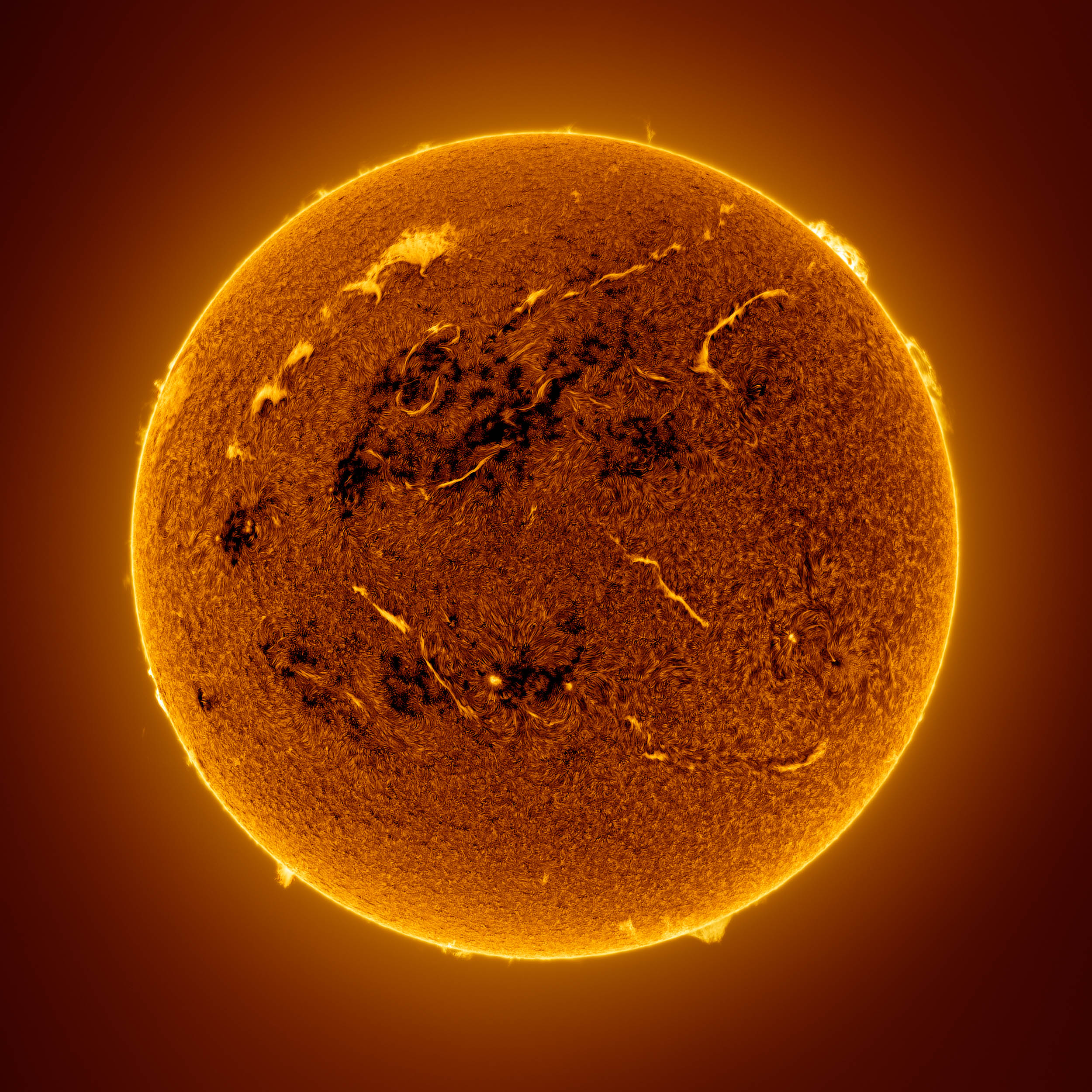 “Abandoned House”This image shows an abandoned house in the middle of the Namib Desert with the Milky Way rising above it. This image shows an abandoned house in the middle of the Namib Desert with the Milky Way rising above it. The haloes and veil of clouds around the stars creates a dreamlike appearance.
Image: (c) Stefan Liebermann (Germany) “
 Arctic Dragon“
This impressive aurora, which seemingly takes the form of a dragon, was the result of a geomagnetic storm (level G2) generated by a coronal mass ejection. The photo was taken at the Arctic Henge in Iceland, one of the few places with clear skies on that night. Image: (c) Carina Letelier Baeza (Chile)
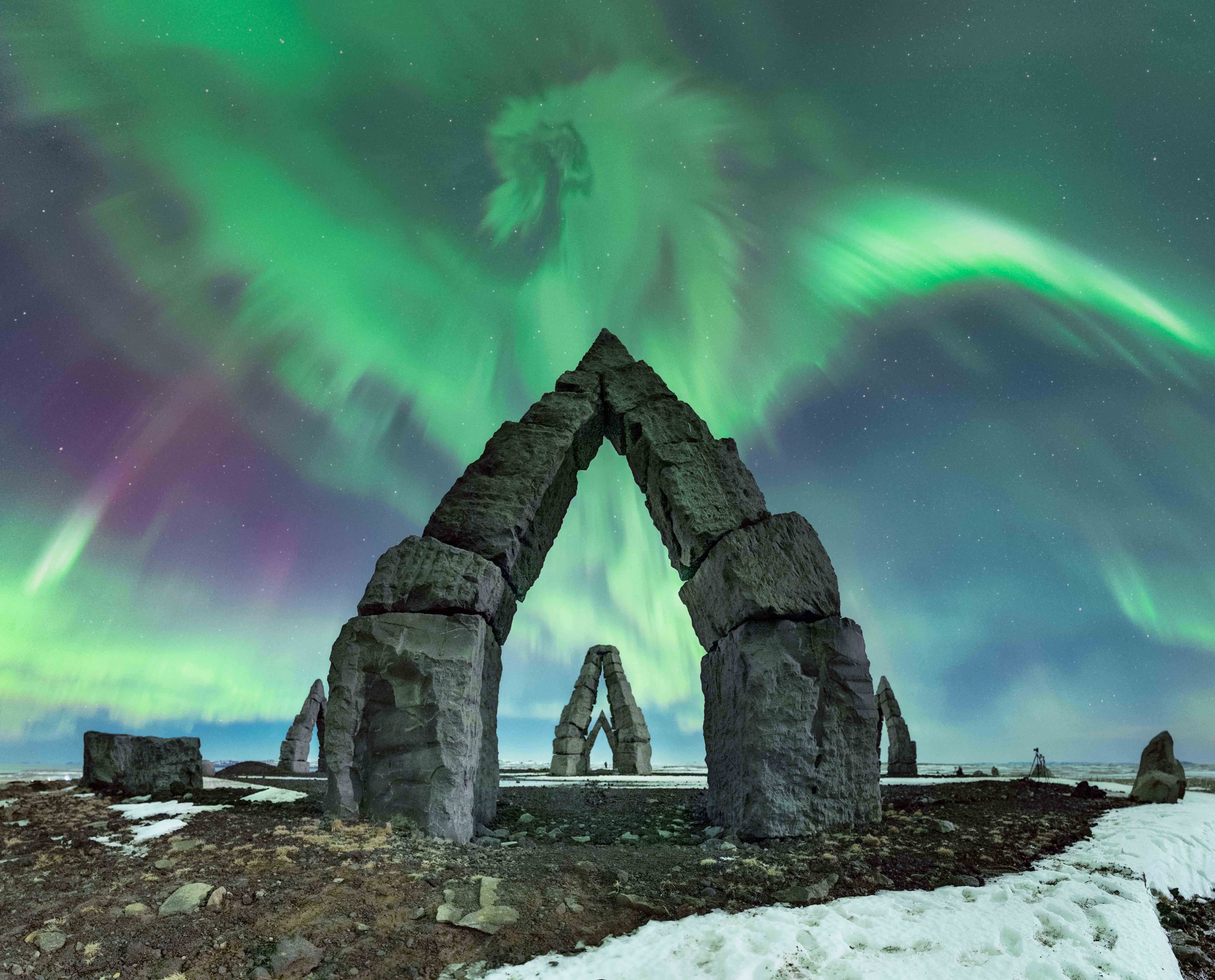 Cari Letelier
“Hunter’s Moon and the ISS
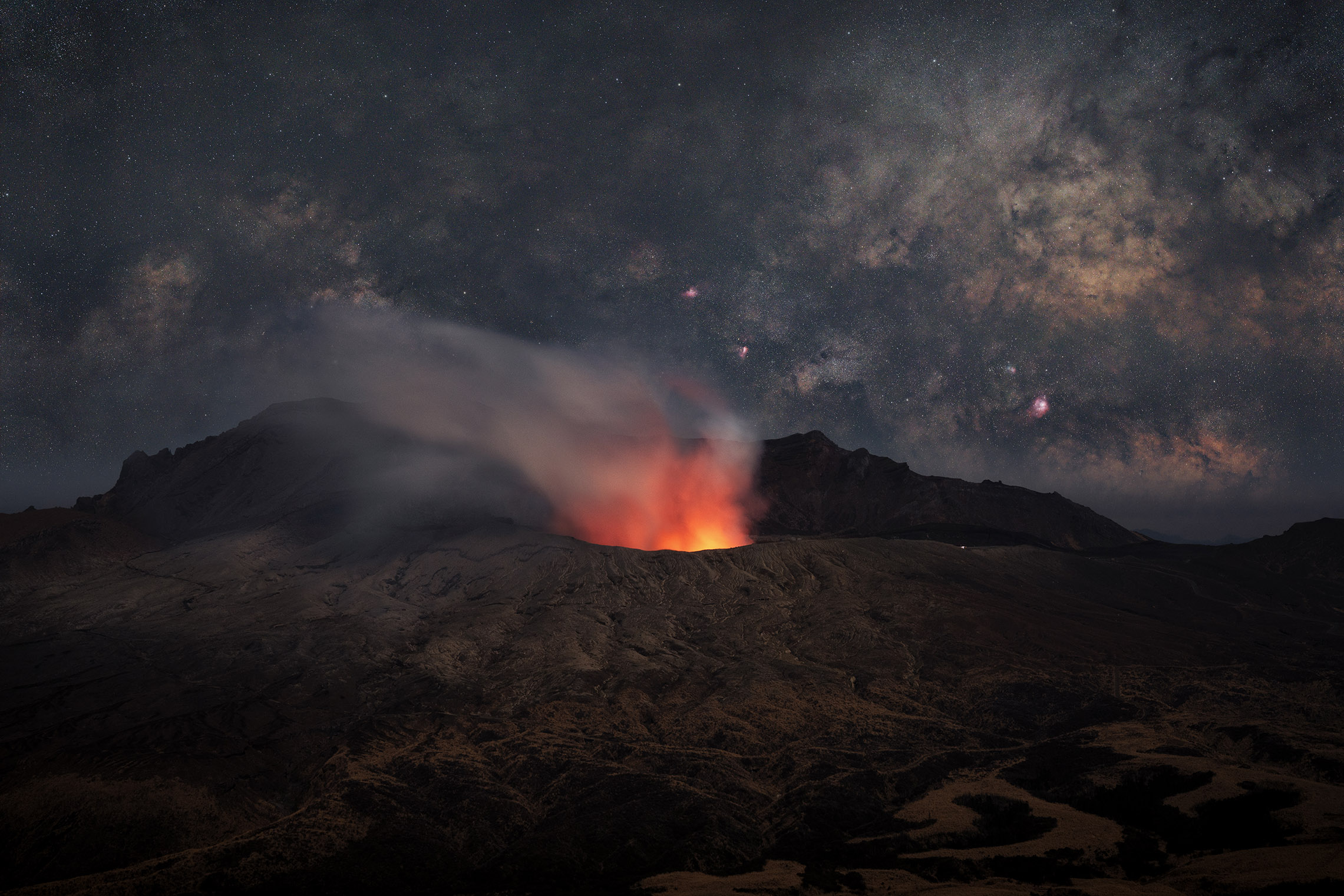
“This image captures the International Space Station (ISS) in transit across October’s Full Moon, the Hunter’s Moon, approximately 12 hours after a partial lunar eclipse. This image shows the striking beauty of a Full Moon, with its combination of rugged highlands and bright crater-rays, as well as darker maria. Image: (c) Tom Glenn (USA) 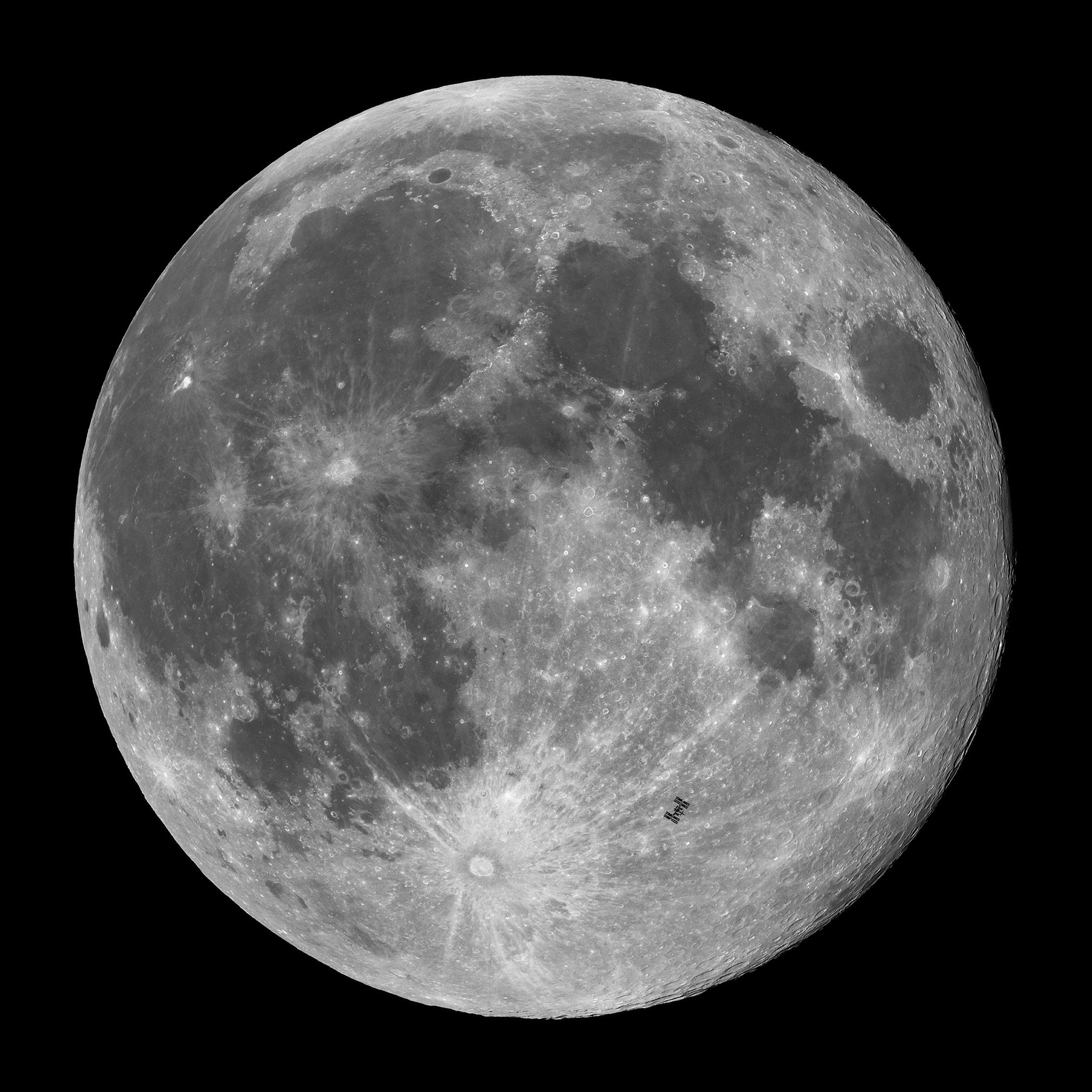 “Earth and Milky Way Galaxy Show”Mount Aso in Kumamoto Prefecture is the collective name for the five peaks often called the ‘Five Mountains of Aso’. Nakadake is one of the five peaks. It has an active volcanic crater. Abe wanted to show that the Milky Way had been watching over Earth’s activity since prehistoric times. This is a composite photograph with the foreground and sky photographed separately but without moving the tripod.
Image: (c) Yoshiki Abe (Japan)“
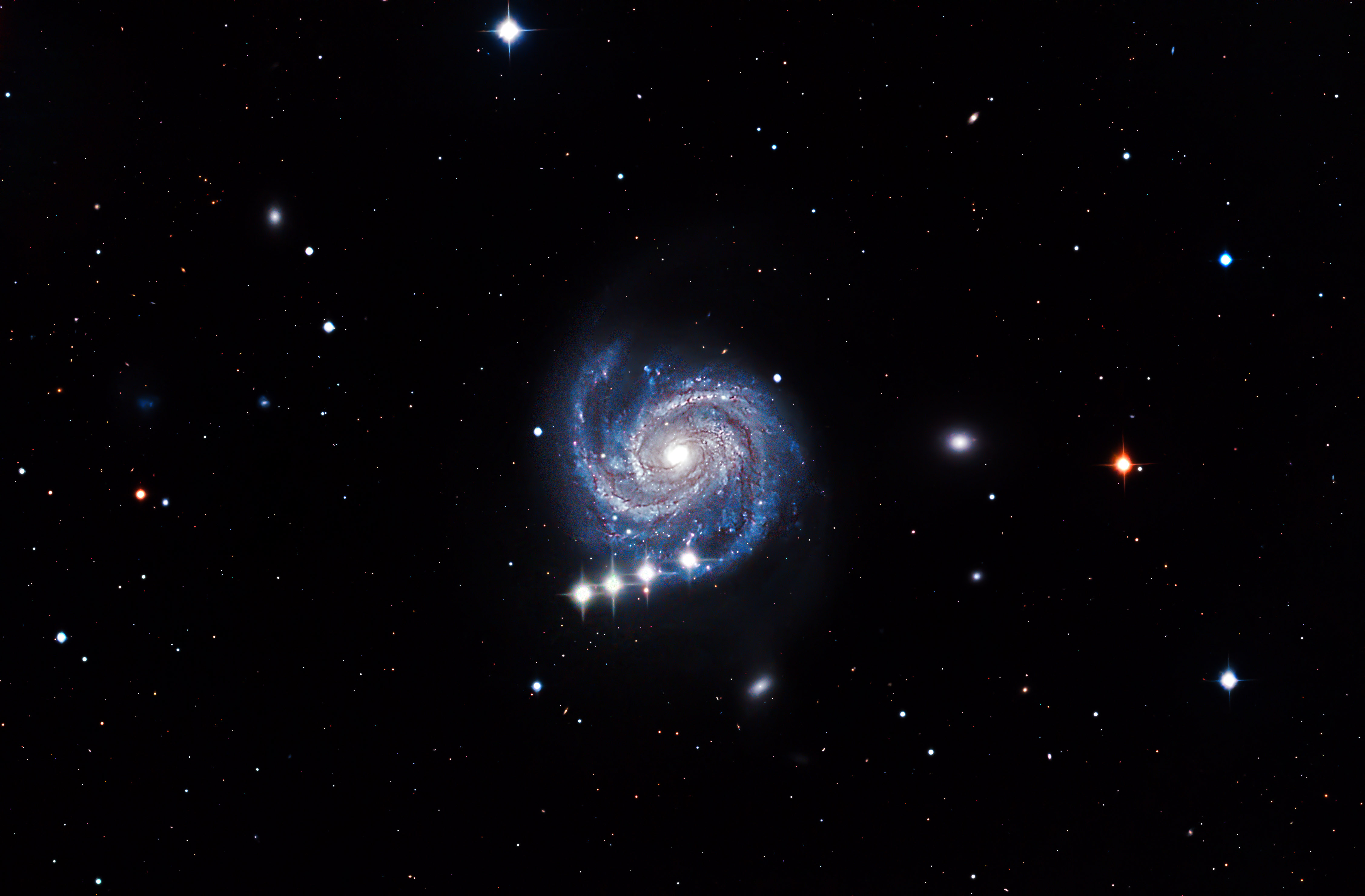
 M100 (The Blowdryer Galaxy) and Ceres“
In this image the photographer was able to capture a dwarf planet, Ceres, more than a billion times smaller than its galactic counterpart, transit beyond the galaxy’s spiralling arms. Ceres is brighter than its galaxy counterpart and travels quickly across the night skies. This image was captured using multiple long exposures over an eight-hour time period in order to show the beauty of Blowdryer Galaxy as well as the relative speed of Ceres. Image: (c) Damon Mitchell Scotting (UK)
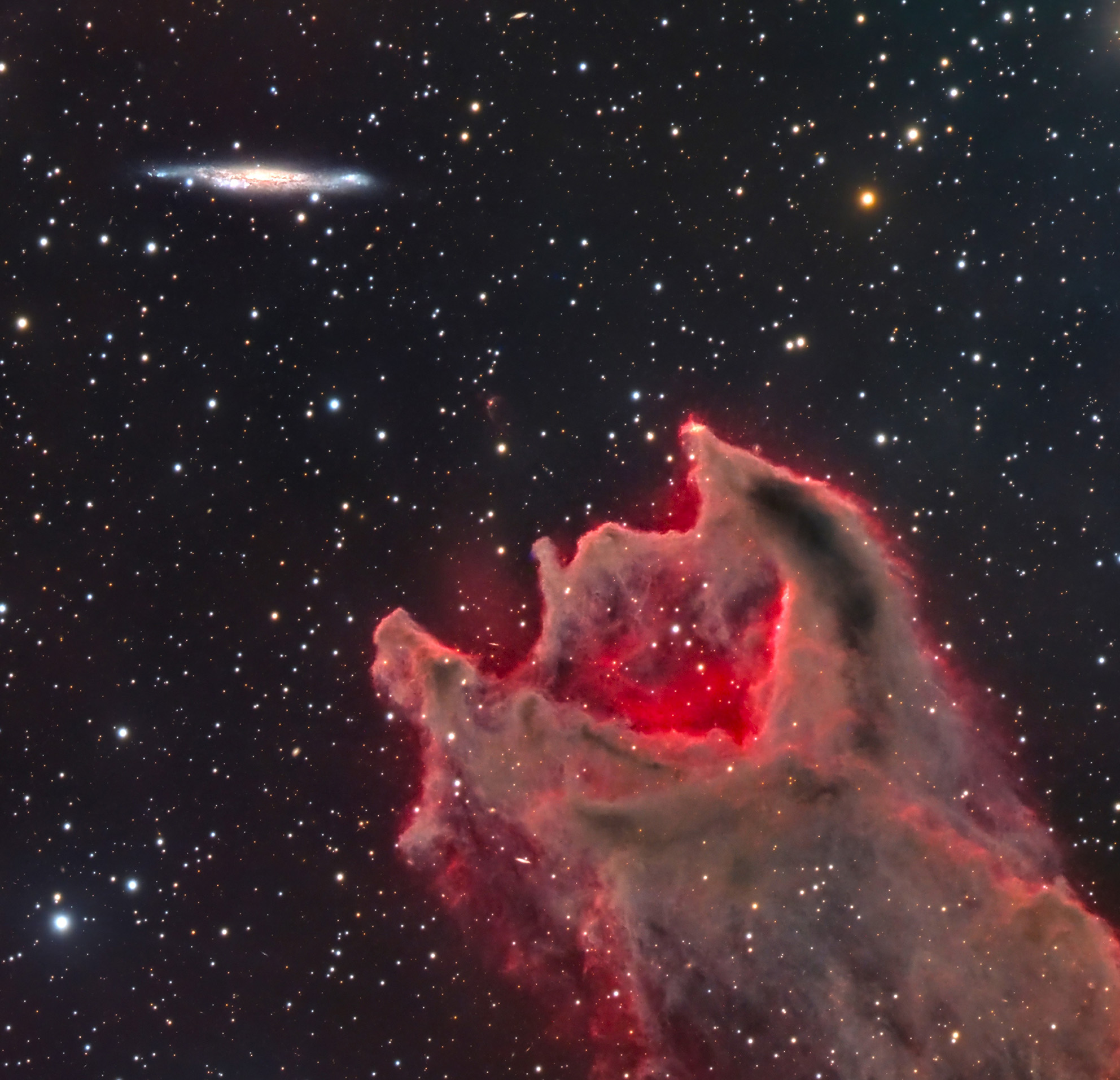
 “The Galaxy Devourer“
CG4 (Cometary Globule 4) is a complex of nebulosity and dust with a very peculiar shape, located in the southern constellation of Puppis. The galactic worm’s ‘head,’ which is about 1.5 light-years in size, was created by a team of astrophotographers. They rented a powerful 500mm Newtonian telescope from Chilescope service and then processed the raw files. This image was created by a group of astrophotographers who rented the powerful 500-mm Newtonian telescope from Chilescope Service, processed the raw files, and voted on the best ones. Image: (c) ShaRa
 “Serpentine“
This image was taken at Snettisham Beach, famous for its vast tidal mudflats that attract migrating birds in staggering numbers. The dilapidated jetty in the foreground was constructed during the Second World War so that gravel from nearby pits could be transported by boat. The trailing stars are reflected in the curved channel of the mudflat. Image: (c. Paul Haworth, UK) “
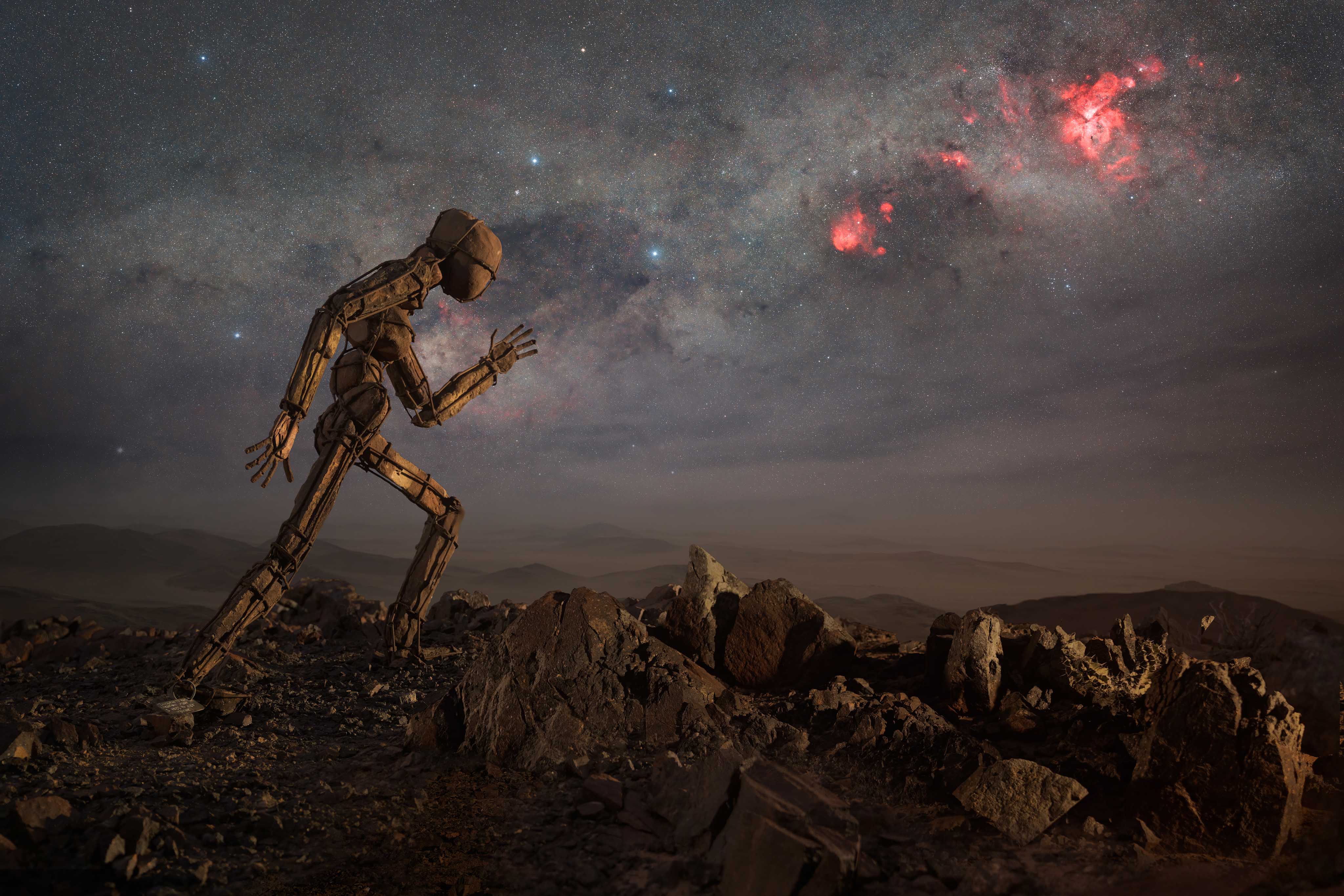
 Run To Carina”This photo captures a statue in north-west Namibia. This is one of the stone sculptures that make up a group known as ‘Lone Men Of Kaokoland ‘. Nobody knows who put them there. The tripod was first moved to get a clear view on the horizon, and then a long exposure was taken of the man running.
Image: (c) Vikas Chander (India) “
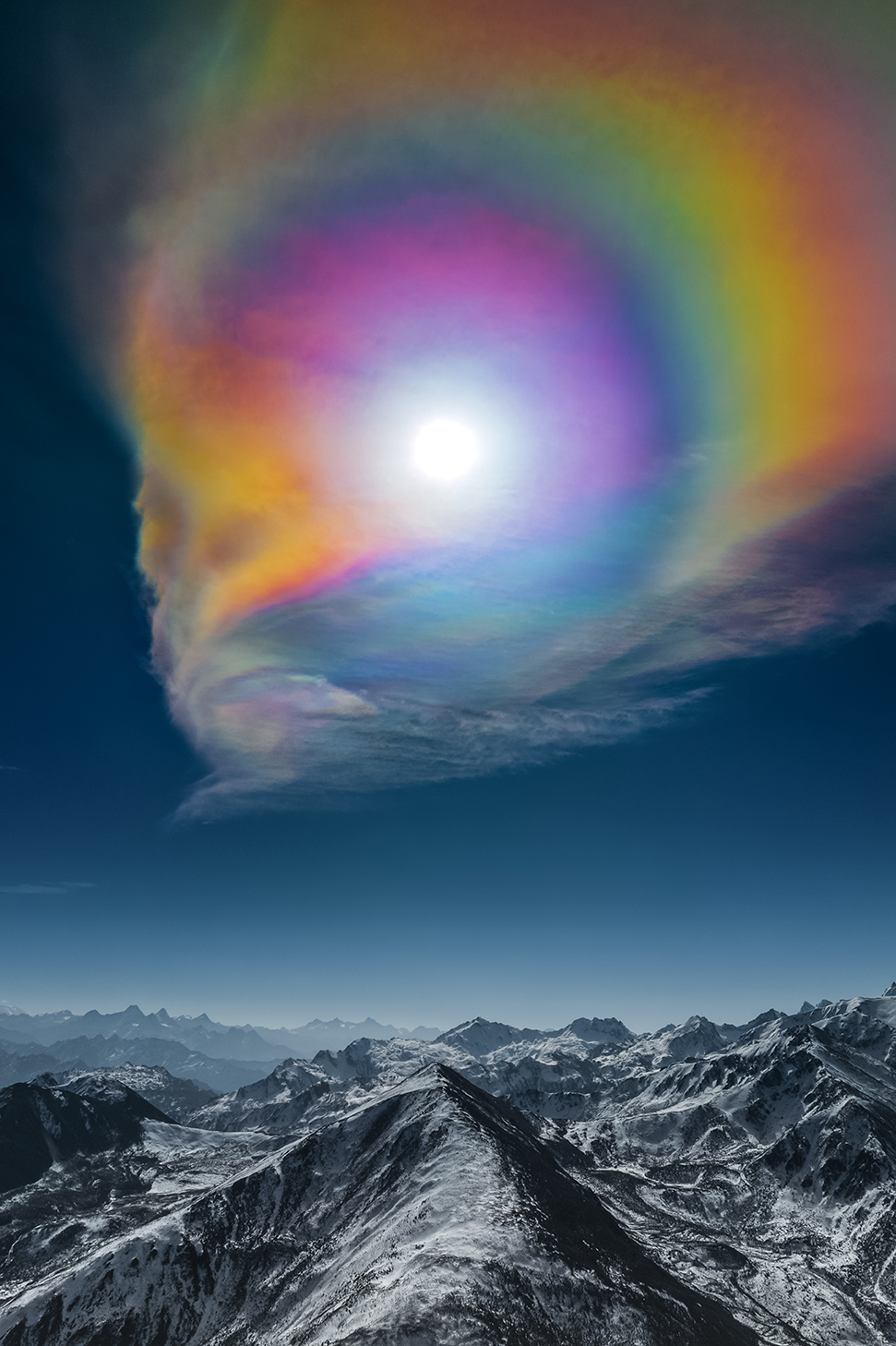
 The Palette of the Himalayas“
During the Spring Festival, the Sun and altostratus clouds acted together to create this huge corona, soaring above the Himalayas. This creates a huge colour palette over the snowy peaks. [as the region was formerly known]Image: (c) Geshuang Chen (China) “
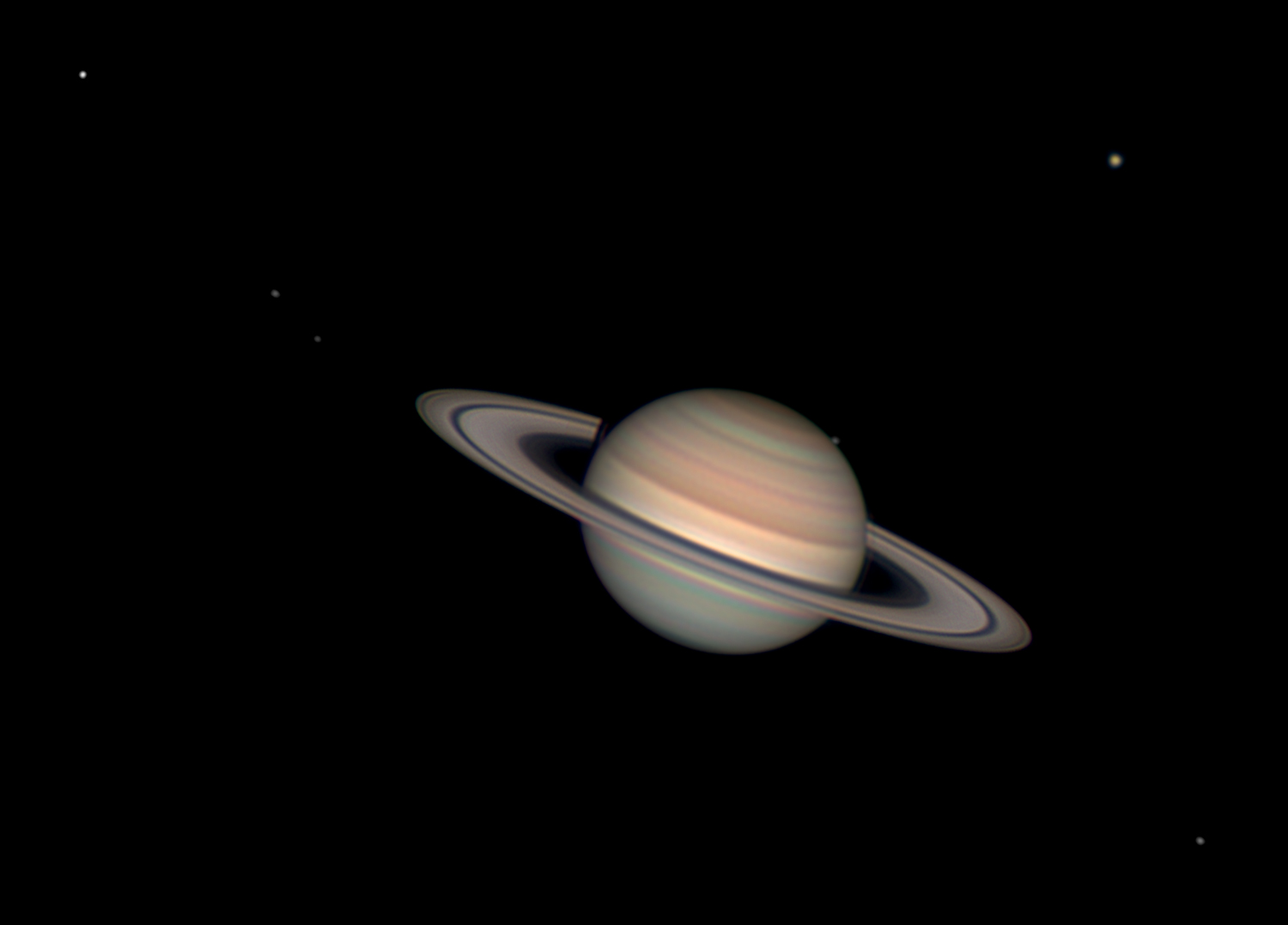
 Saturn with Six Moons”Saturn’s decreasing ring tilt means the moon Titan is closer to Saturn from our viewpoint than it has been in over a decade. Tethys, which is about to disappear behind Saturn in the middle of the picture, is on the left. Enceladus, Mimas, Rhea and Dione are to the lower-right. The shadow of the planet is visible on the rings, along with the Cassini division and Encke division. Image: (c) Andy Casely (Australia)
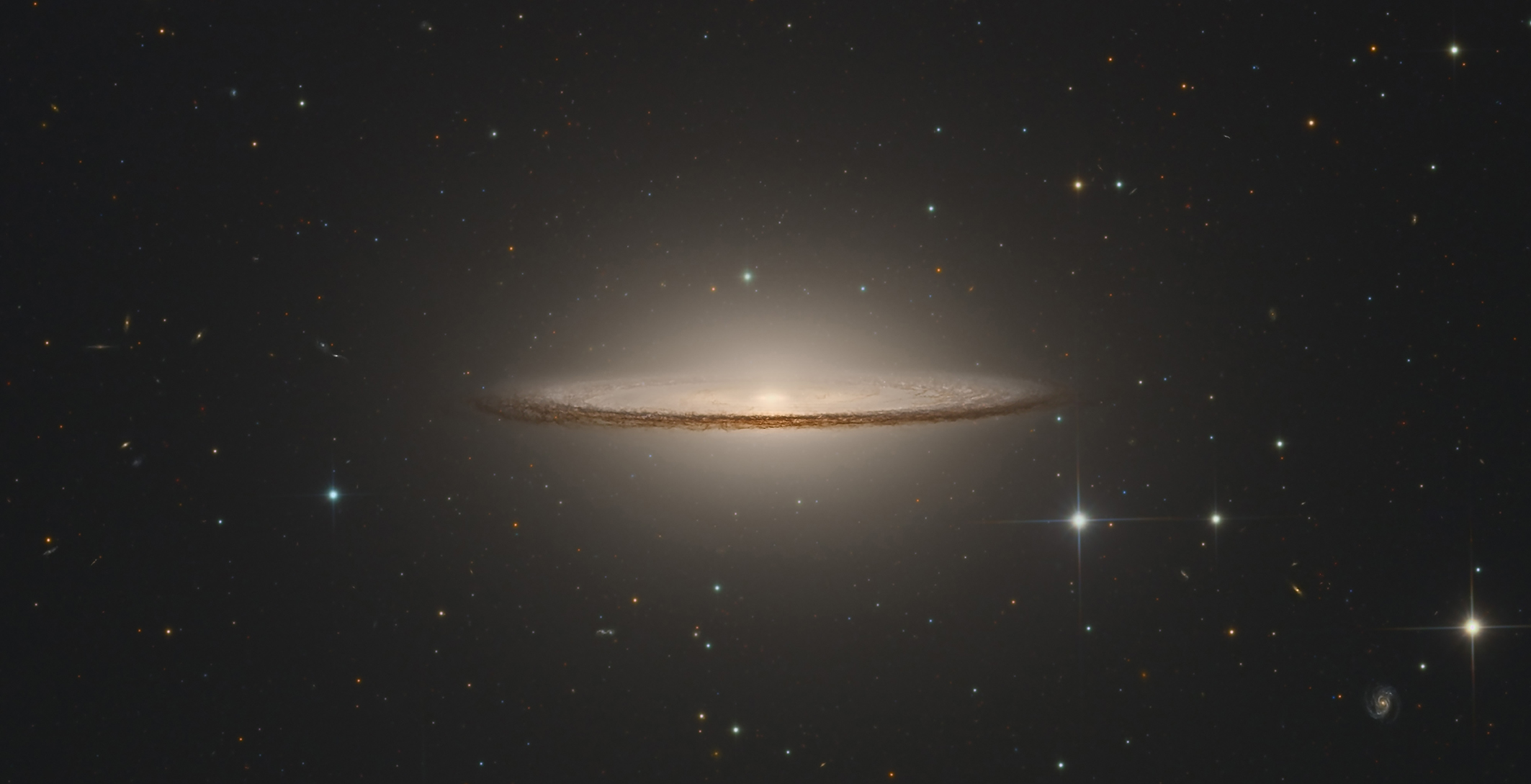
“The Inner Dust Lanes of M104 (The Sombrero Galaxy)
 “ The intense brightness of M104’s core often hides the details that lie inside the encircling ring of dust. The dust in this image appears to spiral towards that core. It is floating on a thin layer and falling towards the massive black hole at the center.
Image: (c) Kevin Morefield (USA)“
 The Scream of a Dying Star” Image: (c) Kevin Morefield (USA)
“The Scream of a Dying Star”
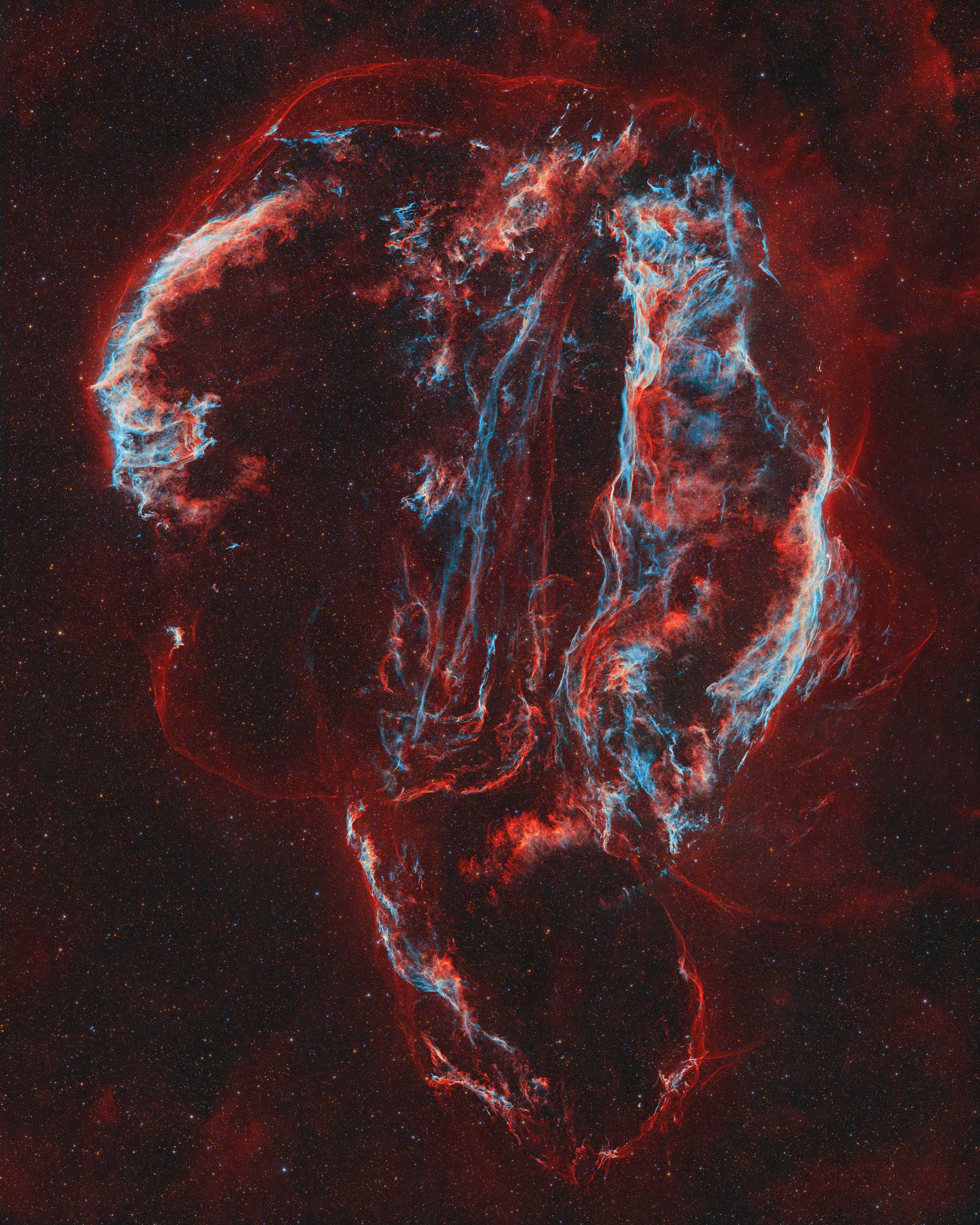 The Cygnus supernova afterglow is a popular object with astrophotographers, but the idea here was to take advantage of the high quality of the sky and the long exposure time to highlight details that are rarely seen, such as the outer envelope of the supernova remnant. The name of the image is a reference to The Scream by Edvard Munch, which represents the scream that continues reverberating through space even after the star has died.
