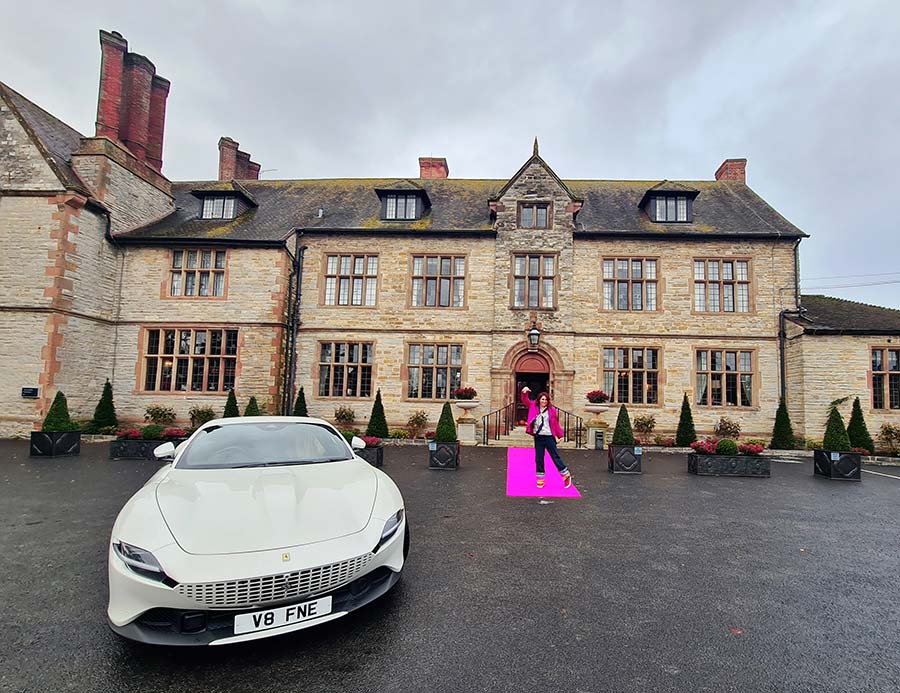
Supercars for Women? Still Designed by Men, for Men
Once regarded as boys’ toys, supercars now appear in the driveways of an increasing number of women. But peel back the marketing, and you’ll find something else entirely: cars still made for men.
McLaren Automotive, purveyor of sleek speed machines with price tags starting around £200,000 and soaring into the millions, claims its cars are designed with inclusivity in mind. They’ve assembled a team of 40 male and female employees of various body shapes and heights to test ergonomic comfort. It all sounds promising – until you sit behind the wheel.
I drove a McLaren back in 2018. I loved the drive. It was wild, thrilling, fast. But let’s be clear: there was nothing female about it. Not in the way it was built. Not in the way it made me feel, unless you count feeling like I had to prove I could tame the beast.
The assumption that female-friendly means increasing boot space or lightening the door? That’s not going to cut it.
I don’t need a glovebox for my makeup. I need a cockpit that doesn’t feel like I’ve stepped into a spaceship built for six-foot-tall tech bros.
Who Is Fitch?
Fitch, one of the women working at McLaren, points out that their GTS offers the biggest luggage space ever. You can, she says, “lay your dress out and not wrinkle it.” Lovely. But if that’s the benchmark for female inclusivity, we’re still living in the land of assumptions. Dresses and dainty fingers.
The truth is, supercars are still designed to be masculine status symbols – loud, angular, aggressive. And let’s not forget the cockpit controls that seem to be styled after a fighter jet. Take the Ferrari GTC Lusso. Try navigating its GPS system without needing a PhD in cryptography. Try doing that at 200mph. I’ve driven it. It’s beautiful, it roars like a lion, but its navigation system is about as intuitive as flying the space shuttle. Can a 72-year-old actually drive it for ten hours straight? No. But that’s not because she’s a woman. It’s because no one can. These are racing cars dressed in cocktail attire. They’re not Bentley. They’re not Rolls-Royce.
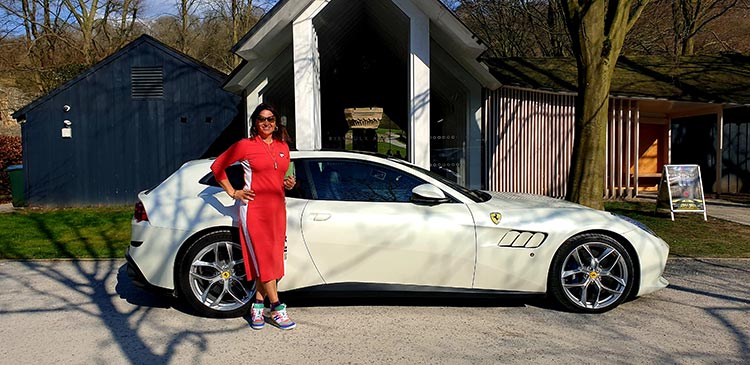
Who Is Dee?
Dee, the founder of the luxury boutique Suzanne, says her female clients show up in everything from Lamborghinis to Ferraris. But for big shopping trips? They return in their big 4x4s. Why? Because no woman wants to squeeze £10,000 worth of silk and sequins into a carbon-fibre matchbox with butterfly doors. McLaren says they’re focusing on usability – making doors easier to open, pedals reachable even with petite feet, and interiors accessible.
But let’s call it what it is. These are micro-adjustments. Not full redesigns. Not reimaginings of what a female-driven supercar should truly be.
And then there’s the issue of strength. Fitch admits she’s not very strong and only 5ft 4in, which makes opening some doors a challenge. Instead of changing that, maybe we should embrace it. Doors should be heavy. Let’s not dumb it down. Weight training helps.
And honestly, if a door opens like a Fiat 600, it’s missing the whole point.
We want luxury, not fragility. A heavy door isn’t a burden – it’s a promise of quality. It’s a vault. It’s reassurance.
Gaming Software
But it’s not just the doors. Let’s talk software. Tech in modern supercars is overwhelmingly male-coded – designed by men, tested by men, assumed to be intuitive to men. Ferrari’s controls are scattered, overloaded, and scream performance over practicality. Where’s the elegance in that? Where’s the thought for someone who wants precision and simplicity – not a dashboard that looks like it came out of Star Wars?
There’s also a lingering sense that women don’t “really” drive these cars. We’re assumed to be the passengers. Or the trophy wives picking colours while the husbands pick engines. That era is over. Today’s woman is buying the car herself. She’s the CEO, the creative director, the performance junkie, the track-day queen. She doesn’t need her supercar watered down. But she also doesn’t want to wrestle with it every time she gets in.
Ergonomic
McLaren’s ergonomic test group is a step in the right direction. But are they just measuring reach and grip? Or are they redesigning the experience from a woman’s perspective? Are they asking what a woman feels like when she drives it? Does she feel empowered, or like she’s borrowing something made for someone else?
Imagine a supercar that celebrates feminine power. Not pink stitching or Swarovski knobs. I’m talking about elegance in control design, grace in motion, minimalism where there’s now clutter. Smooth transitions, intuitive layouts, sensual curves instead of spaceship harshness. I want leather that feels like my handbag. I want perfume atomisers, not because I’m vain, but because it’s my car, my space. I want a seat that hugs, not traps. I want tech that supports, not confuses. I want to feel like it was made with me in mind. Not just made tolerable for me.
Let’s also look at branding. Why is the marketing still soaked in testosterone? Track days, speed records, lap times – all vital, sure. But where’s the narrative of freedom, power, confidence?
Where’s the supercar story that doesn’t begin and end with “Top Gear”?
Women are not here for a slice of the pie. We’re here to own the bakery. We’re buying. We’re racing. We’re collecting. We are no longer impressed with patronising adaptations. We want authenticity. We want performance without the performance. You don’t need to plaster “for women” on it – just include us from the ground up.
SUV Versus Supercars
The luxury car world has done a decent job including women in SUVs and sedans. But supercars? They’ve dragged their wheels.
Maybe it’s fear. Maybe it’s tradition. Or maybe, they still don’t know what a woman wants when she wants to go 200mph.
I’ve test-driven them all. I’ve burned rubber in brands worth more than most people’s homes. I know how these cars whisper to you on the road. And I know what’s missing – a deeper connection. A recognition. A mirror of who we are and how we move through the world.
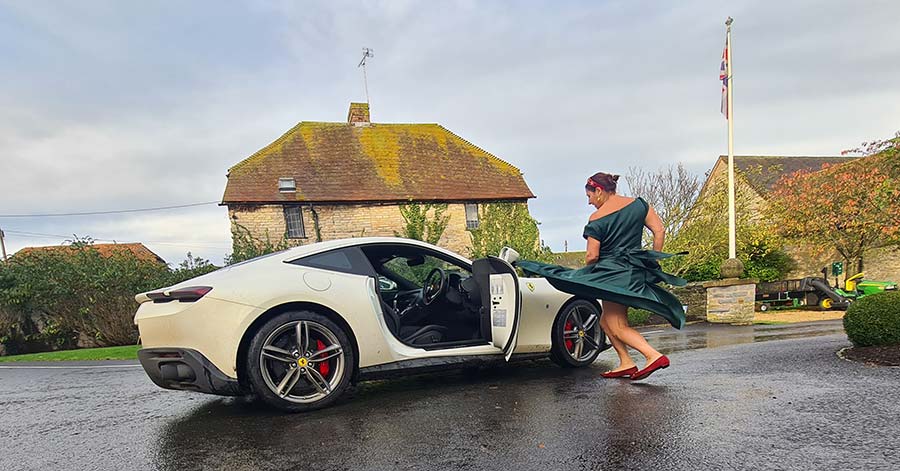
Until that changes, supercars will remain men’s machines with a side door cracked open for women. And we deserve better.
It’s time the automotive world dropped the stereotypes and started designing not just for foot size, luggage, or fingertip strength—but for presence. Power. And the unmistakable energy of a woman behind the wheel.
Because when a woman drives a supercar, it’s not just about speed. It’s about arriving. Her way. On her terms. And not giving the keys back.